
Scientific name(s)
Chrysoperla rufilabrisIndoor life expectancy
10-14 daysApplication
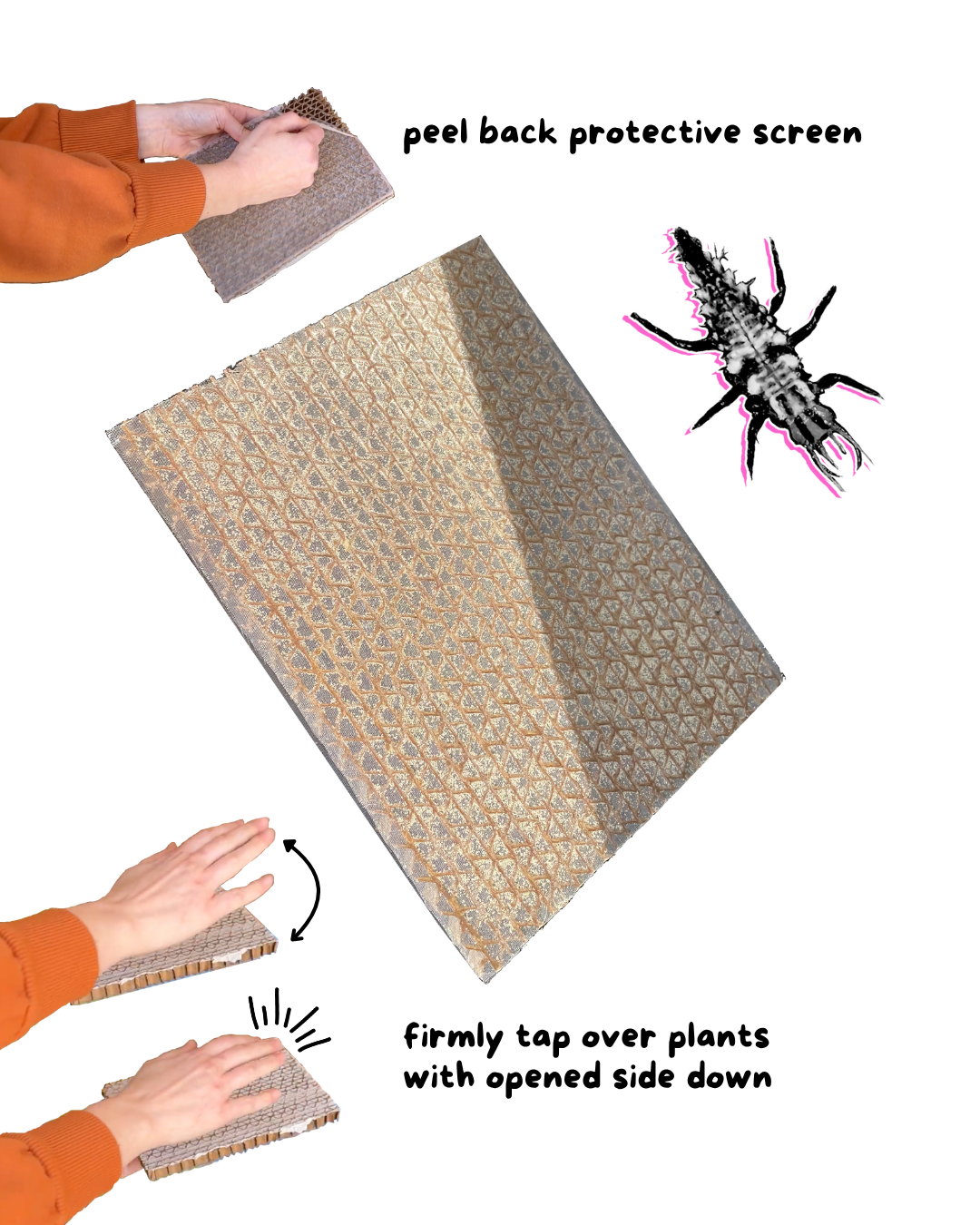
This is the most challenging method of lacewing application, so it is generally not recommended for first-time users. 1. Peel back the film: Tap one side of the hexcell so that the majority of the larvae are sitting on the opposite film. Carefully and firmly peel back the film that is facing up until a few cells are open. This may take some effort. 2. Tap the lacewings out: Flip the hexcell over and position it over the plant(s). Forcefully tape the unpeeled side of the hex cell to get the larvae out. Check the inside of the opened cells to ensure all of the larvae are out. Repeat by peeling back more of the film. 3. Leave the hexcell near plants. Any remaining larvae or unhatched eggs (white or green flakes) will eventually make their way to the plants.Tip
For a more controlled release, tap the larvae onto a piece of paper and release them onto the leaves. Or apply the larvae to plants in a bin, tote, box, or bathtub to contain the release.
SKU
LWFR
Category
Beneficial insects
Lacewing Larvae - Hexcell of 400 larvae
$22.00
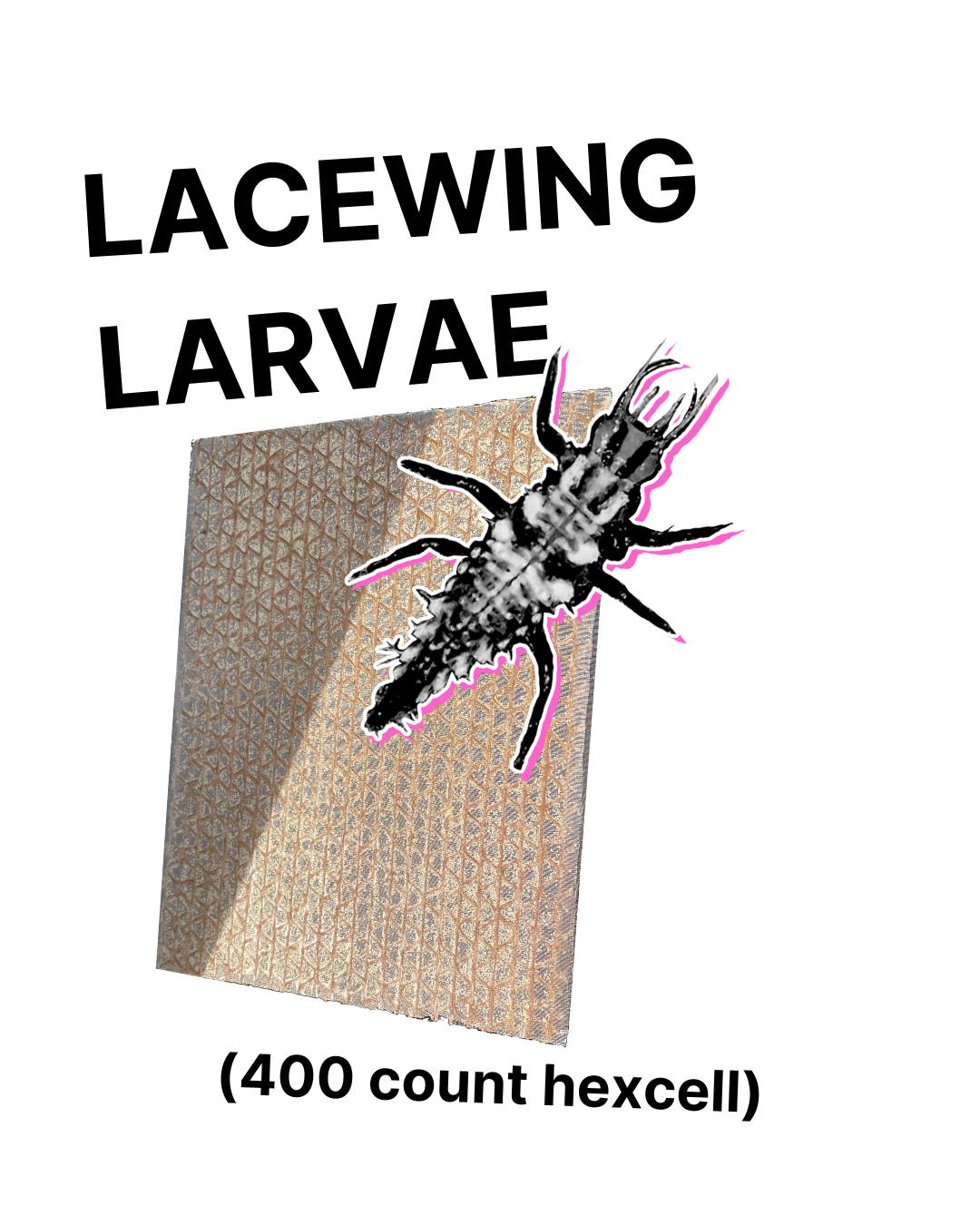
Lacewing larvae are generalist predators that feed on thrips, mealybugs, spider mites, aphids and scale. Good for active pest issues or prevention. A hexcell is a 6” x 4” cardboard frame that contains approximately 400 lacewing larvae in individual compartments to prevent them from eating each other (which they will do in a bottle). Hexcells can be used for plants in all substrates.
Due to the hexcell packaging there is a higher risk of coming into physical contact with the lacewings, and they can bite when agitated. (Their bites are harmless, comparable to mosquitoes.)
400 larvae can treat up to 50 plants in 6 inch pots.